
Bridging Education and Opportunity: From a Small Town to a Big Dream with Project Discovery
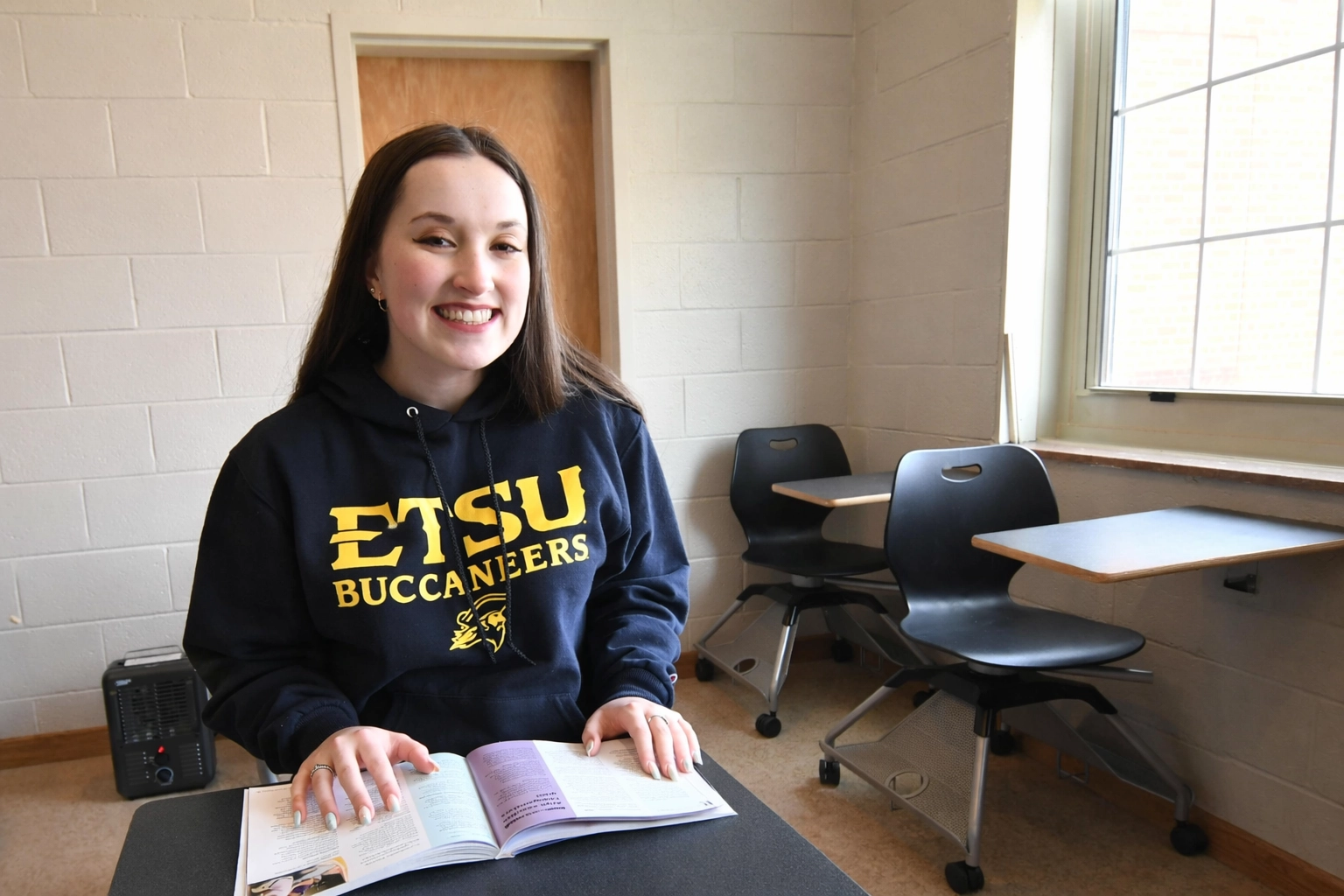
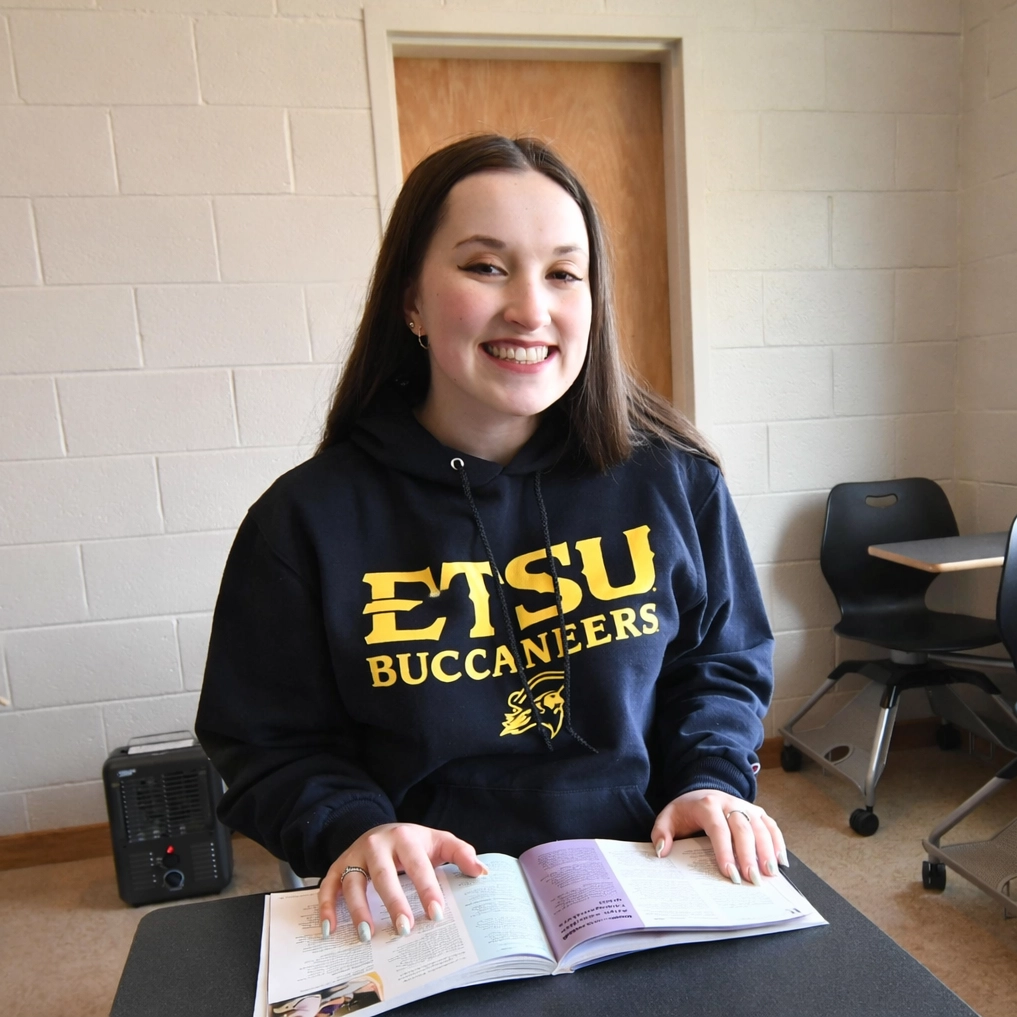
Project Discovery participant Lauren studies in a classroom at East Tennessee State University.
Project Discovery participant Lauren stands outside Hutcheson Hall at East Tennessee State University. For Lauren, the future did not arrive all at once. It unfolded slowly—through long drives on winding mountain roads, after-school study sessions, service projects, and one pivotal college visit that made everything feel possible. Raised in the small, remote community of Hurley, Virginia, Lauren grew up surrounded by close family ties, hardworking neighbors, and a deep sense of community. In a town where everyone knows your name, opportunities can sometimes feel limited by geography. Dreaming big requires both courage and support.
That support came through Project Discovery.
The moment everything clicked for Lauren happened during a college tour to East Tennessee State University. She had already been considering ETSU as a possibility. It was within driving distance of home, offered the academic programs she was exploring, and had a strong reputation in health sciences. But until she stepped onto campus, it was still just an idea listed on a brochure or a website.
Walking the campus changed that.
The brick buildings, the tree-lined pathways, the students gathered between classes—it all felt welcoming. Close-knit. Comfortable. Like home. For Lauren, that feeling mattered. Coming from Hurley, where family is at the center of everything, she knew she wanted to stay close enough to visit home easily and remain connected to the people who had shaped her. The tour allowed her to picture herself not just attending ETSU but belonging there.
“It felt right,” she later reflected. “I could see myself growing there.”
That clarity did not happen by accident. It was the result of preparation and exposure that began years earlier. Through Project Discovery, Lauren was introduced to the concept of college readiness long before her senior year arrived. She began taking dual enrollment courses in the 10th grade at Southwest Virginia Community College, challenging herself academically and earning college credits while still in high school.
The decision to pursue dual enrollment was both strategic and empowering. By the time she graduated high school, Lauren had accumulated enough credits to enter ETSU as a sophomore. That head start not only reduced the overall cost of her education but also gave her the confidence to navigate college-level coursework successfully. She was no longer stepping into the unknown; she had already proven to herself she could thrive in a rigorous academic environment.
Now a junior majoring in Rehabilitative Health Sciences, Lauren’s goals are focused and deeply personal. She plans to become a pediatric occupational therapist—a calling rooted in her own family’s journey.
When Lauren’s older brother, Andrew, was diagnosed with Autism Spectrum Disorder (ASD) at the age of three, her family entered a world filled with questions, appointments, therapies, and uncertainty. As a younger sibling, Lauren watched closely. She saw the challenges Andrew faced, but she also witnessed the transformative power of early intervention and occupational therapy.
Occupational Therapy was not just a service; it was a lifeline. It helped Andrew develop skills, build independence, and gain confidence. It gave her family hope during moments when the path forward felt unclear.
Those experiences left a lasting impression.
“I always knew in my heart I wanted to pursue occupational therapy,” Lauren says. “Watching the difference it made for my brother—it stayed with me.”
As she grew older, that early spark matured into a clear professional vision. Lauren sought opportunities to shadow pediatric occupational therapists in clinical settings. She observed therapy sessions, learned about treatment planning, and saw firsthand how therapists build relationships with children and families. Each experience strengthened her resolve.
Rather than feeling intimidated by the complexity of the work, she felt energized. She saw a future where she could combine compassion with science and advocacy with skill. She imagined herself sitting beside a child working to grasp a pencil for the first time or helping a family celebrate small but meaningful milestones.
Project Discovery played a critical role in transforming that heart-led calling into a practical plan. Dreaming about a career is one thing; understanding the pathway to achieving it is another.
Through the program, Lauren learned how to research degree requirements, understand prerequisites for graduate school, and map out a timeline that aligned with her goals. She gained clarity on financial aid options, tuition structures, and scholarship opportunities—information that can often feel overwhelming for first-generation or rural students navigating higher education for the first time.
Project Discovery also emphasized the importance of community service and leadership. Lauren participated in service activities that connected her to broader community needs and reinforced her desire to work in a helping profession. These experiences were not simply resume-builders; they were opportunities to see how education can serve as a bridge between personal ambition and community impact.
The program provided more than information. It provided confidence.
Growing up in a remote area can sometimes create invisible barriers. Students may wonder whether they truly belong in college classrooms or professional fields that feel distant from their hometown experience. Project Discovery addressed those doubts head-on by offering exposure—college tours, mentorship, academic planning, and consistent encouragement.
For Lauren, that exposure made the difference between uncertainty and excitement. Instead of asking, “Can I really do this?” she began asking, “What steps do I need to take next?”
Her transition to ETSU was smoother because of that preparation. Entering as a sophomore meant she was already accustomed to balancing academic responsibilities. She quickly immersed herself in her major coursework, building a strong academic foundation in anatomy, physiology, psychology, and therapeutic principles. Each class brought her closer to graduate school and her long-term career goal.
Beyond academics, Lauren has embraced the broader college experience. She has connected with professors who have mentored her, classmates who share her interests, and advisors who have helped her refine her academic trajectory. Being close enough to drive home to Hurley when needed has provided emotional stability—a reminder that pursuing a big dream does not require leaving behind your roots.
Her story reflects a larger truth about rural education and opportunity. Talent and ambition exists everywhere. What often determines whether students realize their potential is access—to information, to mentorship, to experiences that broaden perspective.
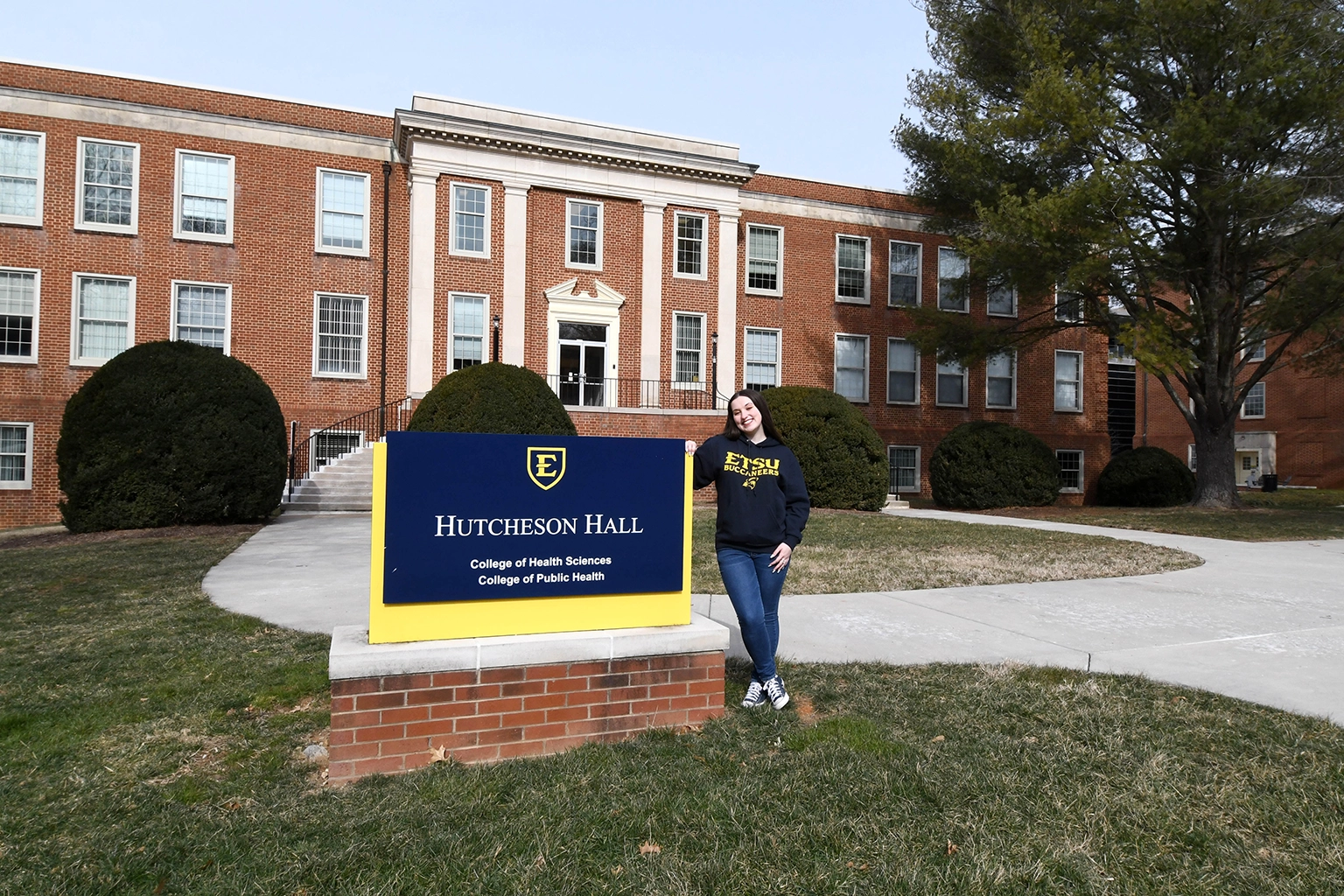
Project Discovery participant Lauren stands outside Hutcheson Hall at East Tennessee State University.
Project Discovery exists to provide that access.
For students in communities like Hurley, programs like this can be transformative. They introduce possibilities that might otherwise remain abstract. They help students translate passion into action. They replace fear of the unknown with structured planning and tangible steps.
Lauren’s journey is not just about one student choosing a college major. It is about the power of early intervention—not only in therapy, but in education. Just as occupational therapy helped her brother build skills for independence, Project Discovery helped Lauren build the tools she needed to navigate higher education confidently.
Today, as she moves closer to applying for graduate programs in occupational therapy, Lauren carries both gratitude and determination. She understands the sacrifices her family has made, the encouragement her mentors have provided, and the responsibility she feels to give back.
Her long-term vision extends beyond earning a degree. She hopes to return to communities like her own—rural, tight-knit places where access to specialized pediatric services may be limited. She wants families to feel supported, informed, and empowered. She wants children with developmental differences to have every opportunity to thrive.
In many ways, her professional path mirrors her personal journey. It is about building bridges—between small towns and universities, between diagnosis and progress, between uncertainty and confidence.
When asked what advice she would give to students considering Project Discovery, Lauren does not hesitate.
“Go all in,” she says. “Don’t hold back.”
She acknowledges that stepping into new environments—touring campuses, enrolling in college-level classes, asking questions about financial aid—can feel intimidating at first. But she emphasizes that growth often begins at the edge of comfort. The willingness to participate fully, to take advantage of every opportunity offered, is what transforms potential into achievement.
For Lauren, Project Discovery was not just a program she joined. It was a catalyst. It shifted her mindset from hoping things would work out to actively shaping her future. It gave her tools, knowledge, and belief in her own ability.
Her story stands as a testament to what happens when education and opportunity meet preparation and purpose. A student from a small Appalachian community can walk onto a university campus and see not a distant dream, but a realistic next step. A younger sister inspired by her brother’s therapy sessions can envision herself becoming the professional who changes lives.
Bridging education and opportunity is not an abstract concept. It is a lived experience—one campus tour, one dual enrollment class, one mentoring conversation at a time.
And for Lauren, that bridge has carried her from a small town in Virginia to a clear, confident vision of her future: helping children grow, one milestone at a time.
People Incorporated of Virginia offers both Adult Workforce Development and Youth Workforce Development services, providing career coaching, training support, financial assistance for certifications, and pathways to stable employment.
For communications, marketing inquiries, or partnership opportunities with People Incorporated of Virginia, please contact communications@peopleinc.net.
